The Plurality of Parkinson’s

I am suspicious of autoimmune diseases with their curiously wide array of symptoms amongst various individuals. Perhaps this umbrella term is masking multiple diagnoses and processes that science hasn’t clarified. How can one disease do so many different things within the body? I was asked to compare a dad and daughters symptoms to discuss the differing disease expressions for two people given the same diagnosis: Parkinson’s.

When Tom (Dad) was diagnosed at 81, he’d always been soft-spoken. As his neck and throat muscles weakened, he became quieter and since these muscles also assist with eating, food became a potential aspiration hazard. His handwriting changed to a shaky version of his already microscopic scrawl. Freezing episodes occurred when walking from one surface type to another (e.g.: carpet to tile) leading to rapid blood pressure drops (known as Autonomic Dysfunction) and fainting. We’d walk in a row: the maroon wheeled walker, Tom plodding stiffly behind and the Plan B wheelchair driven by one of us, ready to grab him as necessary. He never experienced associated pain, nor oddly much of a visible tremor. This is one version of Parkinson’s disease.

At 51, his daughter Joyce’s symptoms began with right foot cramping after a twisting stretch on a colleague’s inversion table, caused a bolt of shooting pain to zip down from right low back to right foot. In the last nine years, involvement has extended to visible cramping and spasticity of her right calf with extension into the entire right side along with a generalized binding of the entire body, especially the torso. At random intervals, the right foot angles outwards and the left big toe stiffly tenses upwards towards the ceiling. Otherwise, she walks and turns smoothly without any of the classic Parkinson’s rigidity or stuttering movements.

These symptoms have built to multi-daily debilitating pain attacks lasting 15 to 45 minutes until the current medication dose can “get on board.” The varieties of discomfort include: a generalized tightening or what she describes as an ace bandage or blood pressure cuff over areas of her body to pulling, ripping, tearing, shredding and burning pain. There have been times wants to amputate her leg off. In the past year, she has been tracking her symptoms every two hours to gather information for her doctors about medication effectiveness and symptom control.

My spouse and I once attended a local conference geared for Parkinson’s patients and family. In the crowd were young folks in wheelchairs, those dealing with rigidity, tremor, spasticity and blunt facial expressions or dementia and all from just one supposed disease. Could a mix of genetics, diverse environmental inputs like chemical exposures, lifestyle factors and gut microbiota health working in combinations create an end result of multiple disease states with false similarities?

I look forward to receiving your feedback.

Dr. Valerie
Me and Mx Cig.

My job causes me pain. Here’s what it’s like on my end to see suffering on yours and feel I have little to offer. I understand we make our own choices. Even Dr. Elisabeth Kubler Ross, who wrote about facing death, discussed her decision to smoke. But…. wouldn’t it be great to get what we need without using things that weaken us?

Before I go on, check out this one minute video link below of David Goerlitz, former Winston model. I met Dave after his presentation in Maine the summer of my first year of medical school. He is no longer with us, but his bravery and tell it like it is attitude is powerful. His has videos online and was featured in two movies: A Billion Lives (released 2016) and The David Goerlitz Story (released 2019).

Dave Goerlitz Video (It’s quiet and rumbly, so increase the volume in advance): https://www.google.com/url?sa=t&source=web&rct=j&opi=89978449&url=https://www.youtube.com/watch%3Fv%3DtJrCSlbkNkw&ved=2ahUKEwjJ3e_h1f6EAxUakIkEHQIlAm8QtwJ6BAgHEAI&usg=AOvVaw1P1QpO_mqWctRq28cWus9Q

Smoking may not immediately kill, but can make you suffer for years. Patients tell me they didn’t realize how often they hacked up loogies (not sexy), smelled of old tobacco or how fatigued they were until after stopping. I firmly believe that anyone can get addicted to any drug and am grateful to my brother for unintentionally discouraging me from cigarettes and in my case, by it’s association, all drugs.

One California summer, my older brother and I walked the short distance from our home to the neighborhood park. We were ages 11 and 9. After lighting the cigarette he’d brought and began coughing, I panicked. I thought he might die or we’d get into ” big trouble.” I remember being curious but afraid of the bad, bad, bad cigarette we’d been warned about in school. Neither of us picked up one again. I sometimes feel like the nutty guy in horror movies, glancing sideways and warning: I wouldn’t go in there if I were you… I wish I could summarize everything I’ve seen into one indelible story that would relay the fullness of this suffering. But I can’t so I’ll leave you with one.

30 years ago, I met a woman looking older than her years sitting stiffly upright in a hospital bed with a look of severe distress on her face at the meal set before her. She’d undergone surgery to remove a portion of her diseased lungs from years of tobacco use and could barely breath. She looked down and kept quietly repeating: “this is too much.” I offered to move a portion of food off her tray, she nodded her assent then visibly relaxed. Everything was hard for her: breathing, holding that breath for the tiny fraction she needed to swallow or trying to rest. There was no ease in her life.

Human bodies tell a story and there is beauty in their journeys. But there also can be heartache within that beauty. Over the years, I’ve been struck by the facial changes I’ve seen in long-time smokers. Some remind me of those whose hands became discolored working hard with grease and machines all their lives. My patients’ faces remind me of the beauty that can exist within the pain.

The Road Home

The long days stretch behind those heavy eyes

The creased cheeks are thickened and full with

lines of black, dotted freckles marching in rows

The years of scrubbing can’t clean this skin

The marks are like work hands stained from

years of labor that are finally released to rest

It is a long way to the road home

It is a long way to the road home.

Let there be some ease even in times of pain,

Dr. Valerie

Getting the MOST out of the initial SPECIALIST visit

You might be wondering how can I get the most use of my specialist’s time? How do I convey the entirety of my journey and it’s impact? How do I quickly get this doctor up-to-date with a complicated history, my wishes front and center, while helping that same all too human doctor cross-reference the copious medical files in their brain? The short answer: you prepare. You’re the expert as to how you feel inside your body and prep work can save so much time and frustration. This is how I got ready for my father-in-law’s first visit with the movement specialists before his eventual diagnosis of Parkinson’s with Autonomic Dysfunction.

Gathering the data. This part is a bit of a mess, because it involves throwing all your observations and data into one metaphorical pile. Get a bunch of scratch paper and write, speak into a recording device or type down your observations and conclusions (may be listed as the “Impression”) of any results (radiology, procedures) you have available. I found it easier to write whatever came to mind in one sitting then return to it in a couple days. If comfortable, your spouse, family members or friends can add their observations.

Compiling the data. Roughly organize the information into chronological order or a form that’s easy for the doctor to quickly review. (Make a copy for the doctor for reference). Next, write a paragraph that creates a picture of how you appear (physically and emotionally) trying to get through your day living with these symptoms. Your doctor only sees you for that moment in the exam room while the ongoing reality can be much different. it might help to think of how you’d write scenes in a movie with you as the main character. What would this person look like during different parts of the day?

Caveat: give an accurate range of experiences and avoid describing only your worst or best day. Overstating symptoms can lead to too much treatment which sometimes can be worse than too little. You want to be heard, but don’t want to either minimize or inflate the problem.

Summarize your treatment goals. Dr. Terry Wahls, an internal medicine doctor with expertise in research and and her own personal journey with Progressive Multiple Sclerosis, recommends patients find a physical goal as their aim. (E.G.: I want to feel better, so I can: play with my kids or grandkids, travel to Italy or work in the garden, etc). It’s better to have a specific activity you’d like to do, rather than the vague, I’d like to have more energy. You’d like to have more energy or less pain in order to do what?

___________________________________________________________

For more detailed help getting started, here are some questions to consider:

SYMPTOMS. (For each symptom or group of symptoms), indicate:

  1. When did the symptoms roughly start? (Month? Year?)
  2. Was the symptom onset associated with anything(Injury? Chemical exposure? )
  3. Where are the symptoms located and does this move?
  4. How much do the symptoms interfere with your daily activities? You can also ask what tasks are you finding it hard to do because of the symptoms?
  5. How much time or percentage of your day, are your symptoms in the Severe, Moderate or Mild Ranges? (Please clarify what “severe, moderate and mild” mean in your view. Mild could mean you can ignore the symptoms, moderate could mean it’s noticeable and delays tasks and severe could mean you are lying in bed or crying).
  6. Is there anything makes the symptoms better or worse?
  7. Is there anyone else in the family that experienced similar symptoms?
  8. Have the symptoms changed over time and in what way(s). How quickly did they change?
  9. How do your symptoms feel in your body? Put down anything you’ve noticed, even if the descriptions sound odd to you.
  10. Any other observations.

TREATMENTS.

  1. Over-the-Counter Medications. Try to be as accurate as possible when describing how many pills you use and how often. The words “as needed” can equally describe someone taking 2 Ibuprofen tablets once a month or 10 tablets daily. If you have intermittent flares, an individual might give their average use as taking 8 tablets a day for 3 days once a month, for example.
  2. Supplements (how many pills, etc do you take and how often?)
  3. Prescription Medications (including inhalers, refrigerated medications, nasal sprays, tinctures and topical agents like creams).
  4. Medical Procedures and Surgeries
  5. Physical and/or Occupational therapies
  6. Complementary Treatments: EG: Acupuncture, Reiki, Massage.
  7. Lifestyle changes: diet, sleep, relaxation, fitness, meaningful connections and work life).
  8. Any other treatments

Here is wishing you a successful visit with your specialist where you feel your concerns and priorities are heard.

Dr. Valerie

Woops,…or things found out the hard way

I think most of us can have a bit of that kid-like rebellion when someone gives advice. Our brains scream: don’t tell me what to do! Especially if the person might be even a little right – that’s way worse. But…if a friend turns to you and says hey, listen to what happened to that guy, we perk up our ears. Yeah, don’t want to be that guy! This section could be called, all the stories I’ve heard about what happened to that guy.

Most people were doing things we all do: multi-tasking, distracted, angry, hungry, etc. But, certain things come up again and again, so I’ve made changes based on what I’ve seen. For instance, I used to think “I’m young and active; I don’t need to hang onto a hand rail when using stairs. That’s so old person.” Now, I do. People of all ages slip and fall down one or multiple steps. Some sustain an ankle sprain. For others, it’s multiple injuries, breaks or SCI (spinal cord injury). Some require years of rehab. Same fall – different outcomes.

On a different note, I’m not talking about people scaling mountains unharnessed or other intense stuff. You can live your life and experience neat stuff but do the prep. Check out the TED talk: “How I climbed a 3,000 foot vertical — without ropes” by Alex Honnold. It’s an amazing story of solo climbing and excellent example of the importance of preparation. In short, get your thrill on but learn from those who’ve done it successfully first.

The first time I realized that medical work involved seeing the outcomes of people’s decisions, concerned a man and a poodle. Those standard poodles are big and she just had babies. All were snuggled on bedding behind a thin curtain. Being a naturally inquisitive person, he slowly & gently pulled the curtain to one side to look at the sweet pups and promptly got a third of his index finger chomped clean off. My next immediate thought was a reminder to myself stating: Remember to Not Do This! Here are a couple of my don’t do this moments.

Speaking again of animals, I’ve seen time and again nasty bite wounds from hands getting into the middle of a dog fight. The person comes in with a gnawed limb because they used that hand to discourage an oncoming dog from attacking their own. It usually involves a dog on or off leash and sometimes a size discrepancy. Your furrbaby could get hurt and your brain screams: protect, protect. I get it. I have small creatures. But, I have told myself repeatedly: use something else – not my hand. I’ve taken off my shoe and put that in between if that’s all I have. Then again, I wear 15yr old sneakers and not Manolo Blahniks (had to look that up ;))

This leads to infections. You want to clean that nasty bite, so what do you do? If dousing the wound in alcohol or hydrogen peroxide is your go to, rethink that. I’ve seen hands blow up in size and turn bright red …The.. Next.. Day after treatment with overly strong cleansers. Those agents are not recommended in the medical literature because they can worsen healing. So, it’s boring gentle soap and lots of water. Irrigate, irrigate, irrigate. If you’re uncomfortable with the way a wound looks then wrap in a dressing and be seen at a medical facility for further treatment. Especially if it’s popping open with continued bleeding. You also might need a tetanus shot.

What I do if something is in the early stages and just beginning to look like it may become infected (warm, tender and reddish) is to put heat on the area. This is counter intuitive because the area is already hot. A heating pad* is best, because it stays at gentle heat much longer than a warm compress. The heat essentially brings your blood to the area that needs it and within that blood, lives your immune cells which fight off infection. You may still need antibiotics, but sometimes you don’t. If I get to something quick enough, just the heat and my body’s immune system can do the trick.

I have lots more of these, but will start there. Here’s wishing you fun and safety which are the two things that I request from my cat whenever I leave him for the day.

*Could you use an electric blanket in a pinch…….yes.

COVID-19: The New Invisible Man

Creating Safety.

In theaters recently was an updated version of the Invisible Man. It was impressive with superb acting, effects and reasonably explained tech that satisfied this life-long science fiction reader. Horror is not my bag, a comment which reveals my late 70’s upbringing. You get two options and both involve death.

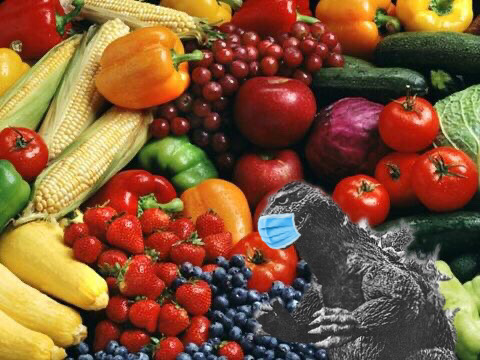
I stopped watching anything with a hint of scary after a short time period of sibling bonding over early Godzilla and other gory flicks. The images left me panicked at night for months. To be fair, my Mother had five children within a seven year span and was reasonably unaware of the oldest two watching early morning tv on the weekend.

Recently, after a day of much productivity, my spouse and I decided to check out available movies. Action tropes make me skittish like I need to simultaneously be on a treadmill alongside the running heroine and romantic stories’ unremitting tension and longing is a strain. Nothing else looked interesting at the local theater. That leads me back to the Invisible Man.

sibling bonding over early Godzilla flicks.

The characters fight against an unseen enemy which involves wild punching and lashing out into apparent emptiness, usually with a knife. The fear is palpable and attempts at self-protection seem ineffectual. This beast of a virus, Covid-19 works similarly. It is unseen, hiding in plain sight, and kills people. So, how do I stay sane and safe in this universe?

I recognized that creating a safe haven started in my mind. Below is my plan of action. Yours will be different based on your specific circumstances. My goal: make decisions that decrease stress. It’s about honoring what you need to feel safe. I review daily up to date information from trusted sources, like the CDC, but I limit the time spent. I look for useful information that changes my plan of action, not inundate myself with repetitious and stressful images.

Viruses are tiny, replicating and mutating quickly, but they have their weaknesses. You have to be exposed to a certain amount of viral particles to cause disease and have a body that is susceptible to that particular virus. Many live on surfaces for 72 hours and their entry into bodies is through orifices: eyes, nose, mouth and hands as the freeway delivery system. So, I guard my entry points. I consider my hands “contaminated” until they’re washed and face unsafe until it’s covered. You also wear a mask as a courtesy to others, so you won’t spread your stuff around. Don’t be the carrier that makes the susceptible person sick.

I’ve decided to make my body stronger so it can protect itself better by using with the data that is known: add veggies and greens. All around the world multiple studies show this, but how? I hide my veggies. Dr. Wahl’s (Wahl’s Protocol,TM) cooks amazing skillet meals with onions, garlic, oil and handfuls of greens and veggies. Yum. I put handfuls of spinach leaves in my coffee smoothie – can’t taste the greens. I can’t stand squash but after heated and pureed into spaghetti sauce, I don’t notice a thing. I make hearty, easy meals. Check out online Powerhouse Foods, by Jennifer DiNoia. Add in the good stuff. Yes, I have cravings and I tell myself, “don’t stop and get something you’ll regret”. You can find a healthy version online.

Complicated systems create stress. During a conversation about how best to protect yourself, a friend was nitpicking about all the choices she makes in deciding when and where she should wear a mask or wash her hands. I simplified things. I leave the house; I wear a mask. I make sure my mask is comfortable and secure, so that I don’t have to fuss with it. I don’t move the mask unless I wash or sanitize my hands before & after. I wash my hands (front, back, in between fingers and nails) regularly with soap that is gentle, so it doesn’t rip up my skin. You get into a routine, then don’t have to think about it. It’s a good practice anyway.

You may ask: everything is opening up; is it safe? I personally still wear a mask and practice the same precautions until we are truly in the clear. I will review new cases to determine when I am comfortable not wearing “gear.”

This pandemic also got me thinking. What if we all wore masks and religiously hand washed every winter (Flu Season)? Perhaps the thousands that die from the flu yearly wouldn’t need to, because the carrier to susceptible transmission rate, us, was blocked. What do you think?

COVID-19 may seem like the frightening Invisible Man lurking silently in plain sight, but we don’t need to be consumed with fear of it. A cloth mask and some plain old soap and water are proven weapons in defeating this tiny foe. Healthy eating provides that extra layer of armor.